Urban pneumatic post · 1853–1984 · remnant industry still running
Mail, in a brass pipe, under the street.
Cities once moved letters by compressed air. Documented networks — New York, Paris, Vienna, Prague, Berlin — how a carrier travelled, why trucks and telephones won, and hospital tube systems as a separate industry.
Thesis
A municipal technology.
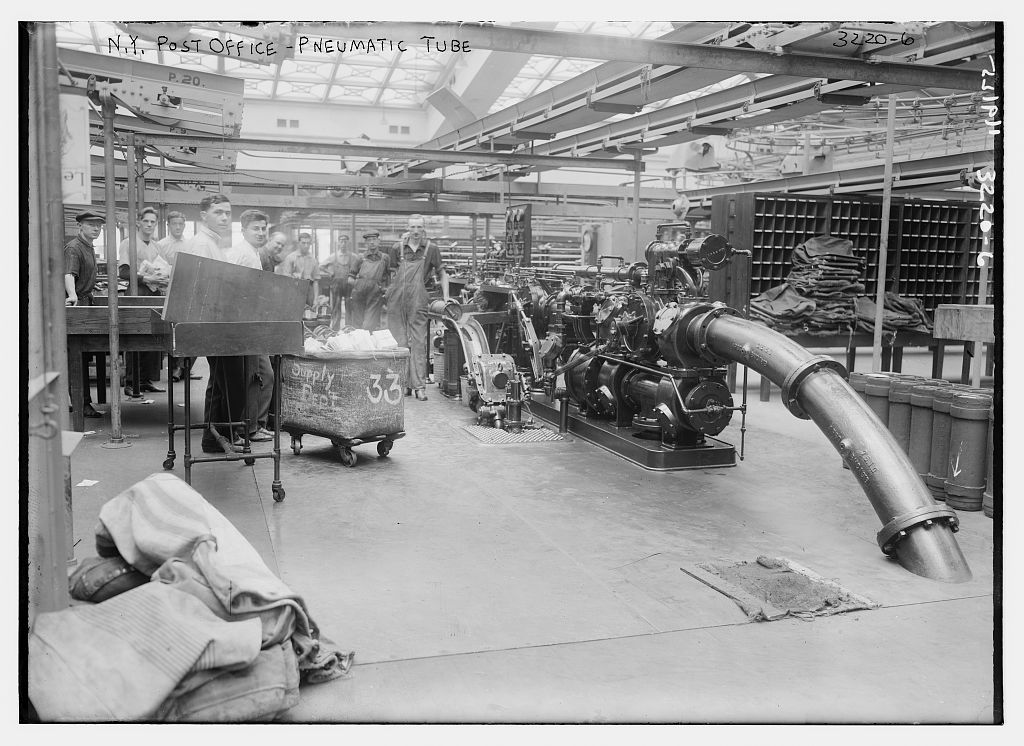
Pneumatic post was a working urban mail system: sealed tubes, pressure differentials, and metal carriers between post offices, telegraph bureaux, and ministries. Museum and postal sources sometimes disagree on mileage and closing years. See Sources.
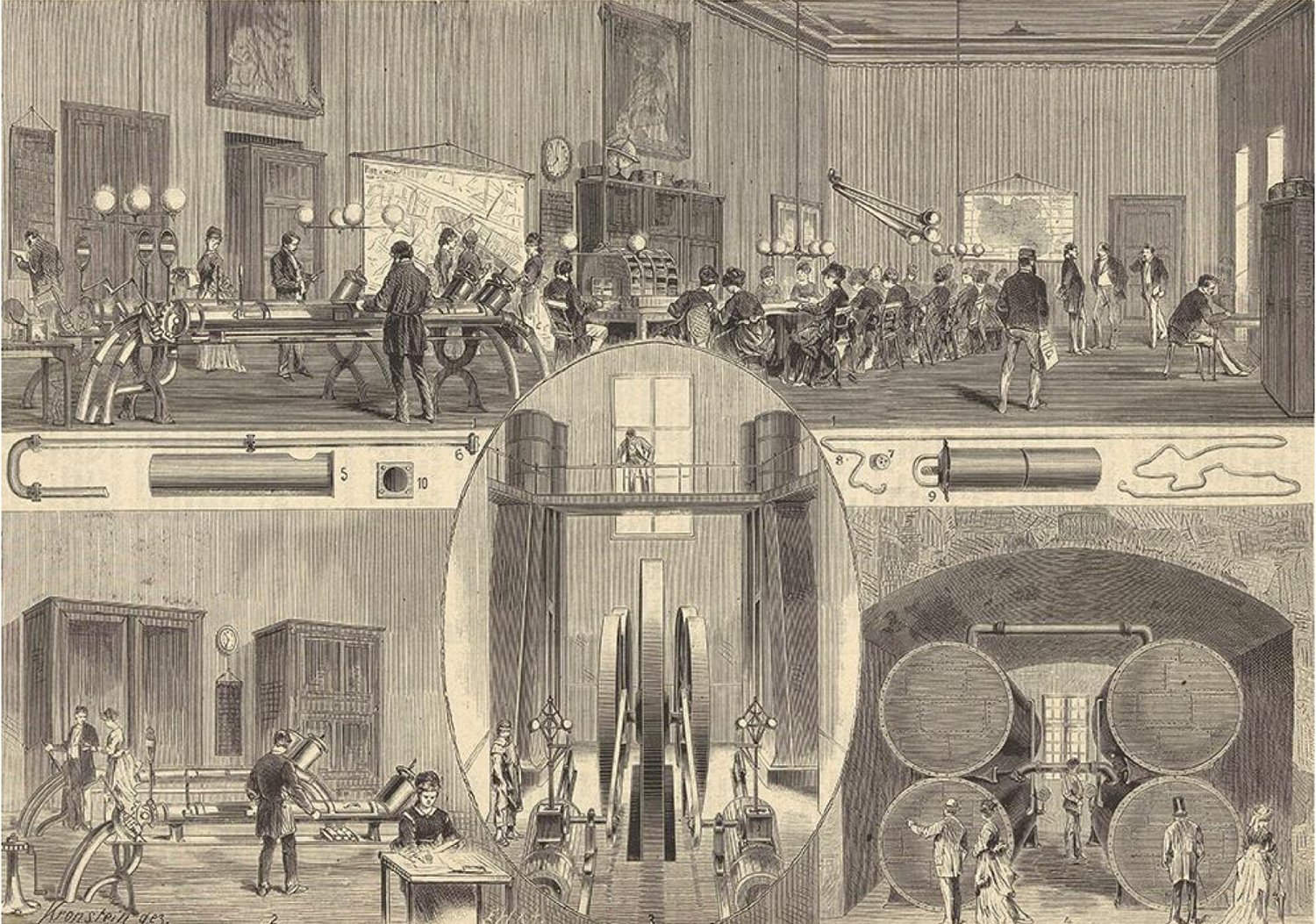
The idea is older than the cities that scaled it. William Murdoch is credited with inventing pneumatic capsule transport around the turn of the nineteenth century; Josiah Latimer Clark’s 1853 line between the London Stock Exchange and the Electric Telegraph Company in Lothbury is the usual starting date for working telegraph-office tubes. From there the technology split into two families that remain distinct.
Municipal postal networks — Paris, Vienna, Berlin, Prague, and a handful of U.S. cities — moved letters and telegram copies under streets. Building systems — hospitals, warehouses, banks, department stores — never needed a city charter. The second family is still in production. The first is archaeology, stamps, and a few surviving Prague pipes.
Hospital and warehouse tubes are not “the postal system that survived.” They are a parallel industry — see remnant.
Cities
Four networks, four endings.
Mileage, station counts, and speeds follow museum and postal-administration figures.
New York 1897–1953
Bulk canisters between post offices. Brooklyn Bridge line. Suspended 31 December 1953 and never restored.
Vienna 1875–1956
Sixty-five-millimetre tubes inside the Gürtel, red boxes, a 2025 commemorative stamp. Closed as unprofitable.
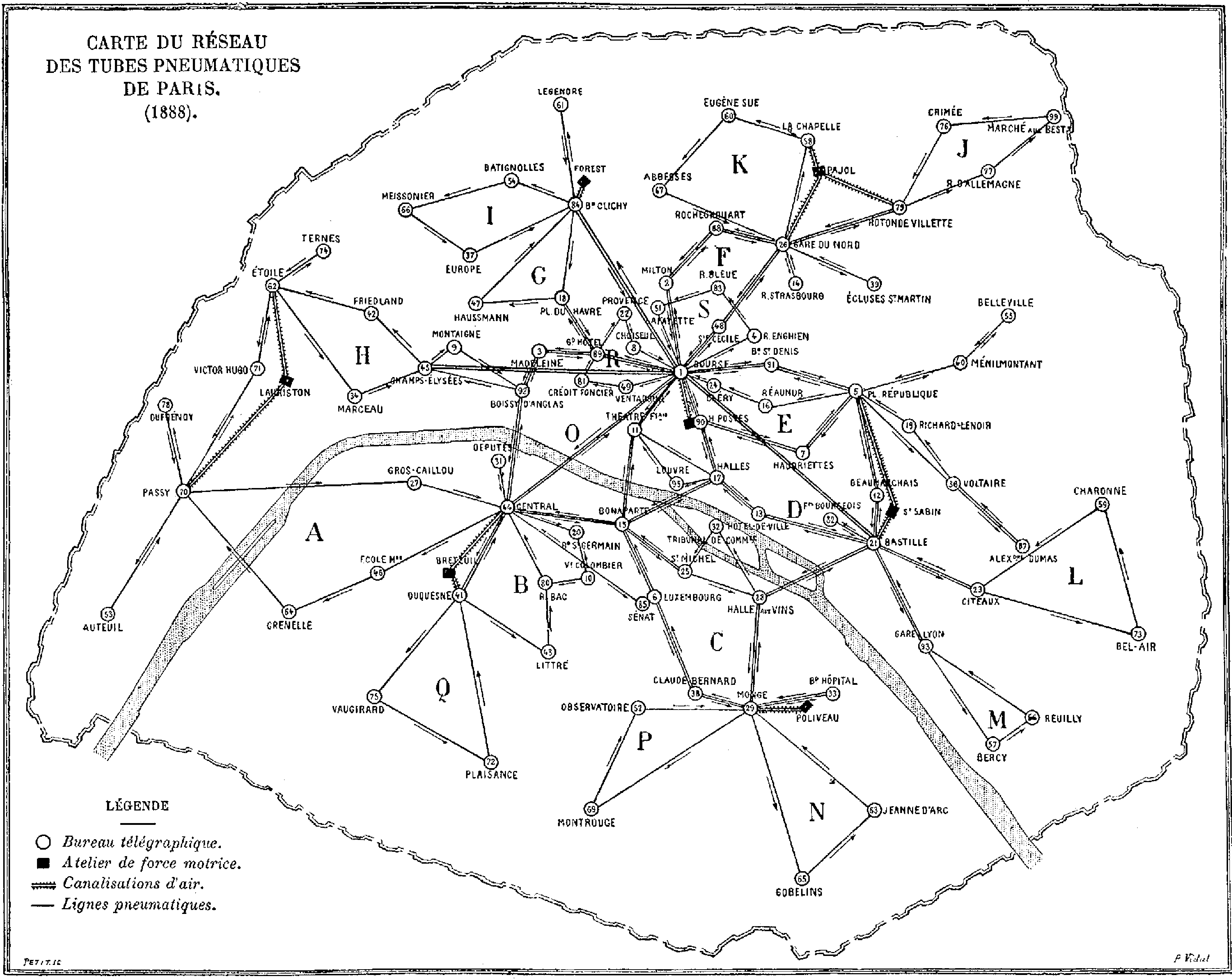
Other documented networks
The Paris pneumatique outlasted New York by three decades. Prague’s pipes still exist, flooded since 2002.
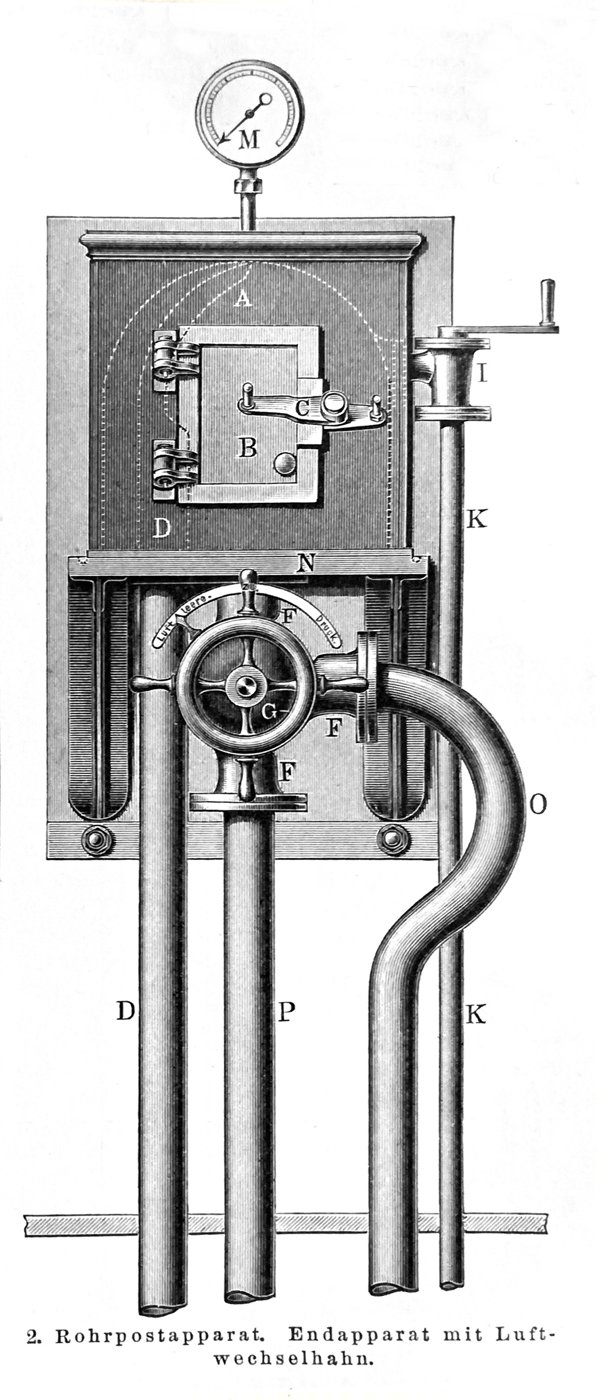
How a postal tube works
Blowers, felted carriers, arrival cushions. European letter tubes and American bulk tubes were not the same machine.
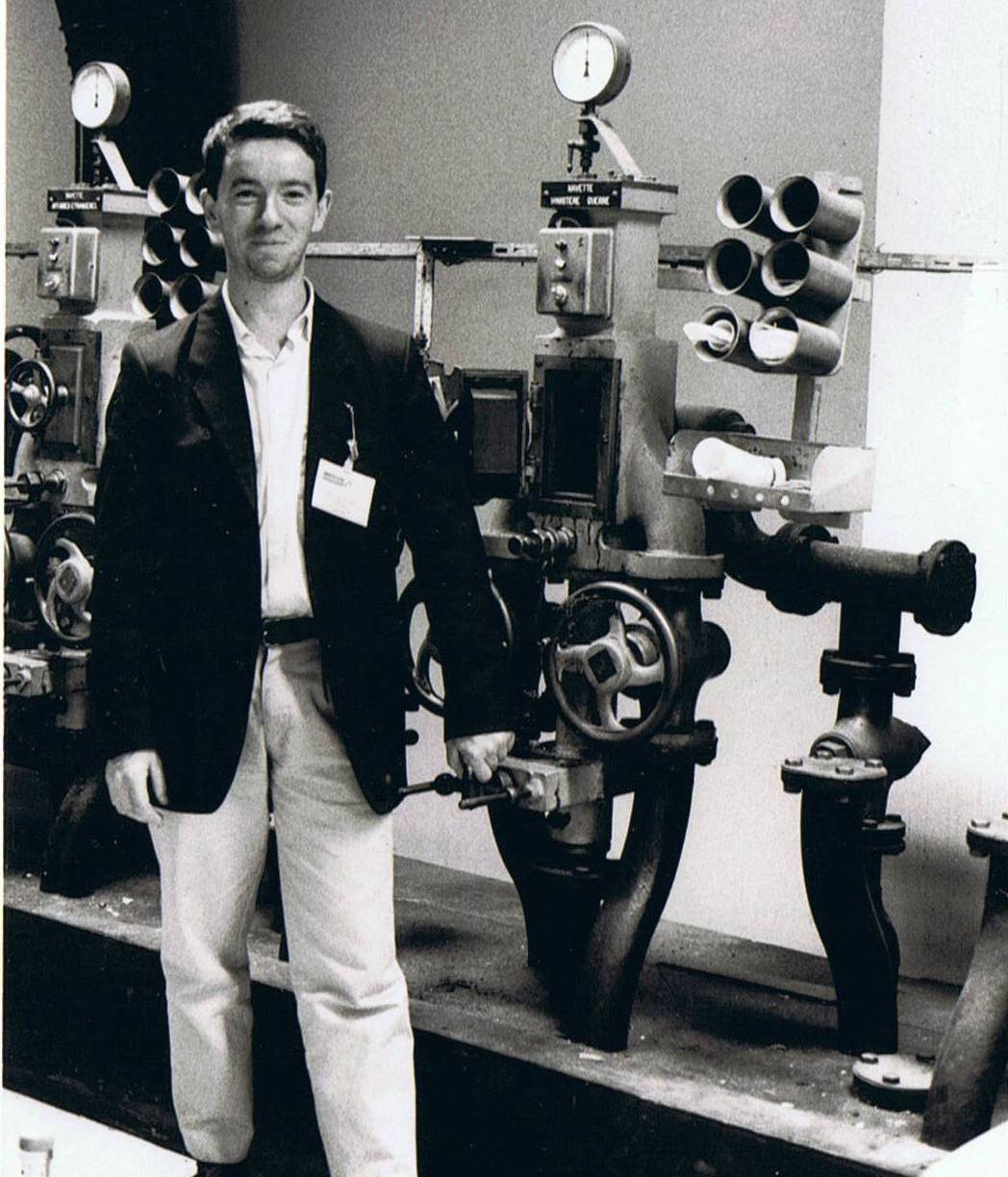
Late survivor
Paris ran until 1984.
A Fortin-Hermann send/receive apparatus photographed at Paris-Central in 1987 on the remaining ministerial network — after the public pneumatique had closed. The public service is the one the histories date to 1984. Photograph: Jérome Ferri, CC BY-SA 4.0.
Also in the cabinet
Stamps, endings, living pipes.
Stamps and stationery, documented closings, and the building-scale industry that outlived the city post.
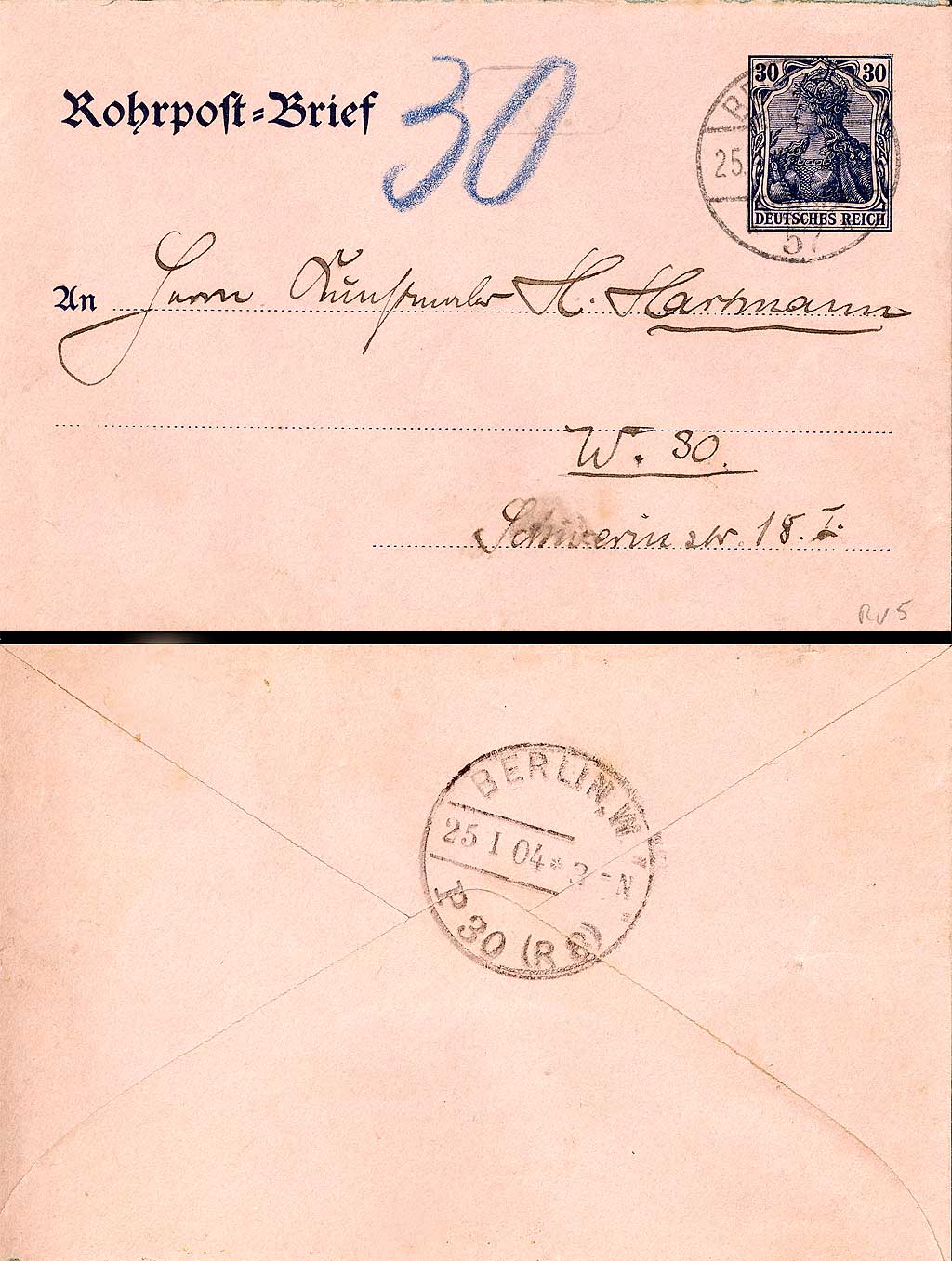
Philately
Italy issued stamps; Austria, France, and Germany issued stationery. Canisters survive as museum objects.
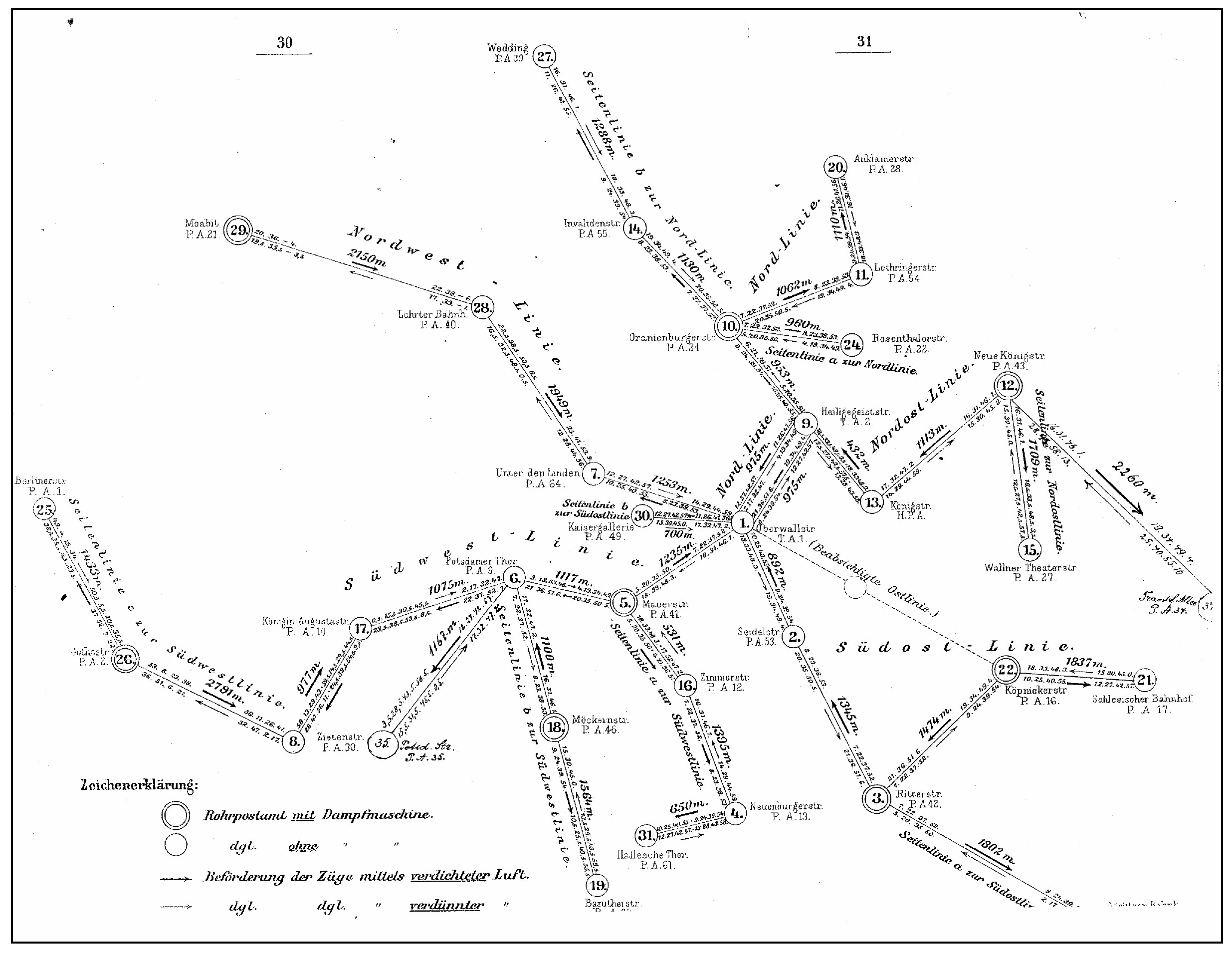
Why cars won
Fixed iron versus moving offices — the National Postal Museum’s account of why the tubes lost.
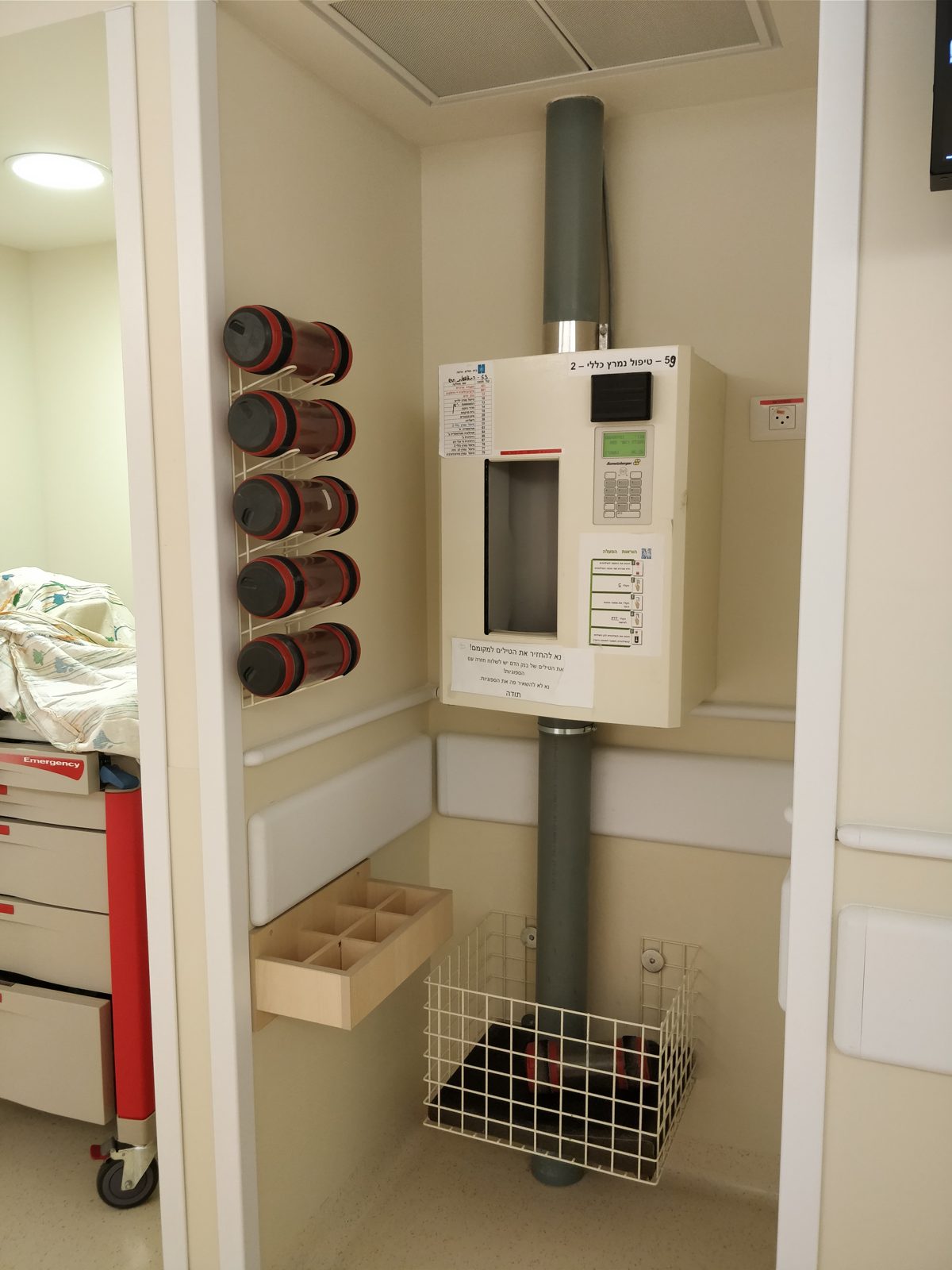
Hospital remnant
Specimens, drugs, RFID carriers. Adjacent technology. Not the city post.