Stamps · stationery · carriers as objects
Philately and the canister as relic.
Italy issued postage stamps specifically for pneumatic post. Austria, France, and Germany issued stationery. Collectors chase pink Austrian cards, Berlin Rohrpost letters, Paris pneumatiques, and the occasional museum-grade carrier.
Wikipedia’s pneumatic-tube article states the national pattern: Italy was the only country to issue postage stamps (between 1913 and 1966) specifically for pneumatic post; Austria, France, and Germany issued postal stationery for pneumatic use.
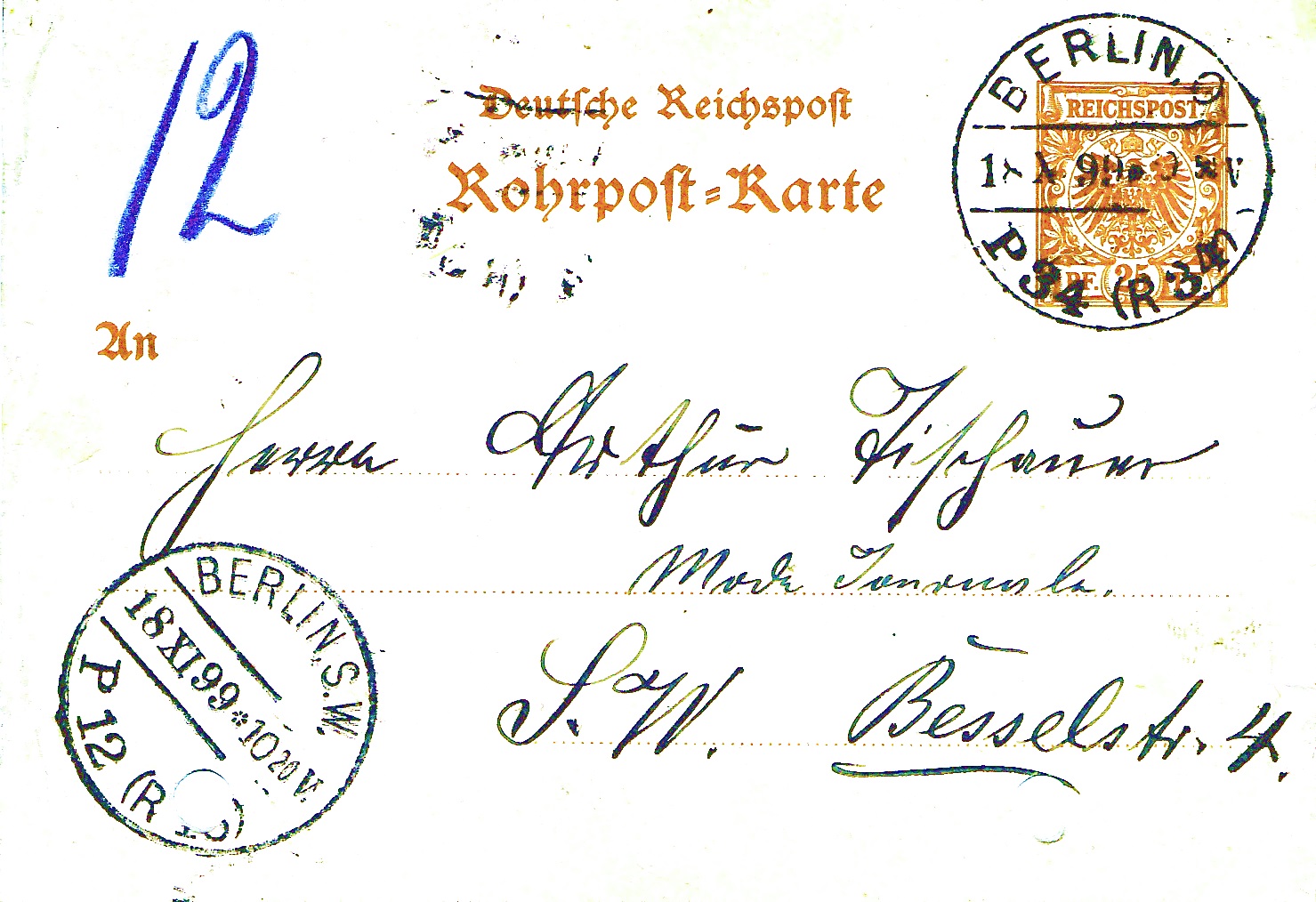
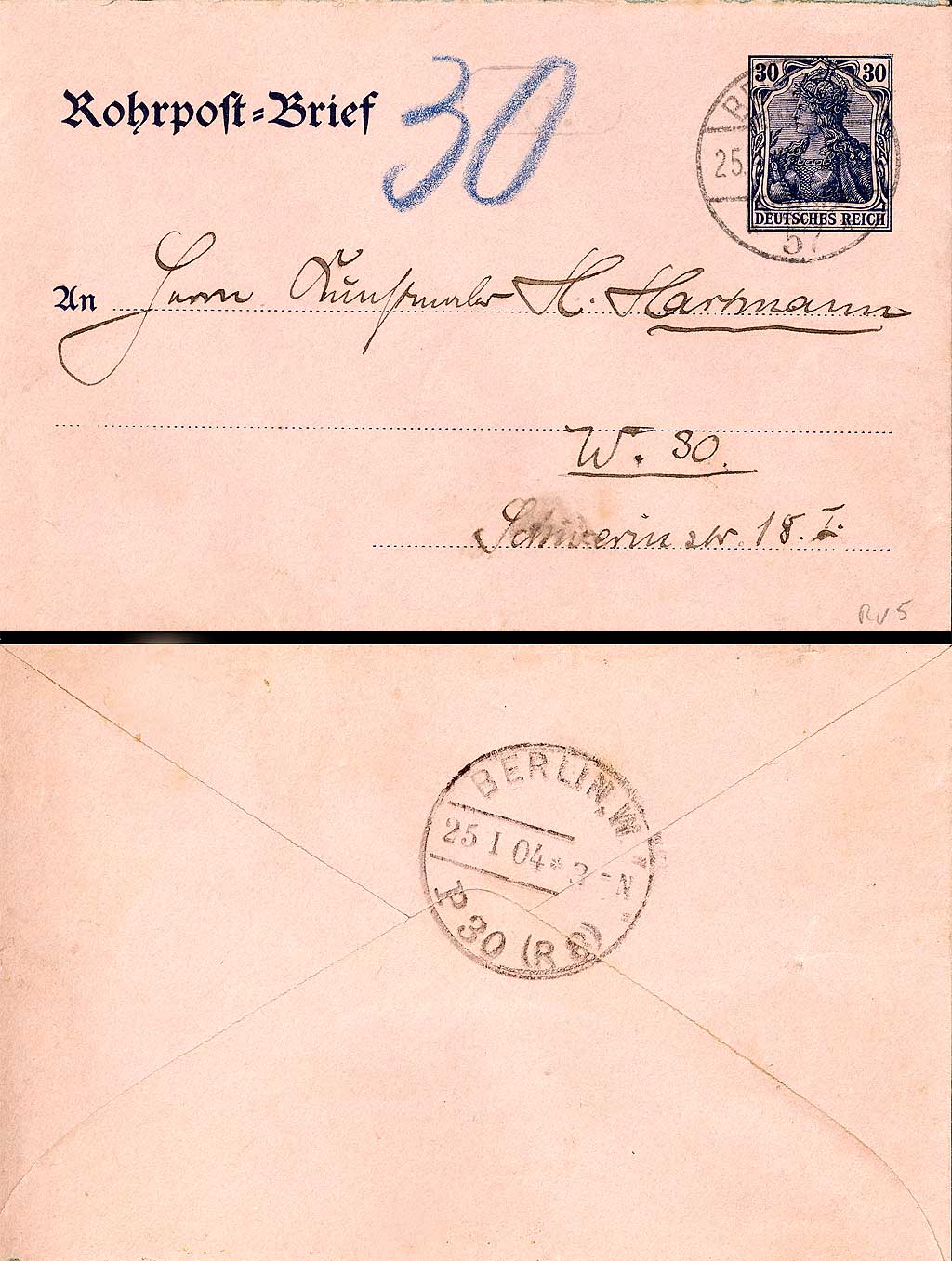
Austrian Rohrpost cards were printed on pink stock so clerks could see them in a mixed bag — a fact restated by specialists around the 2025 Austria Post souvenir sheet, which reproduces a later (1893) letter card rather than the 1875 first issue. Berlin produced Rohrpost-Ganzsachen with their own imprinted stamps; the 1899 25-Pfennig Reichspost card below is one. Paris had the pneumatique as a timed, tariffed product with its own forms. Prague used numerator stamps and arrival marks that collectors read like a route diagram.
The 2025 Austria Post issue — €3.50, 11 February 2025, David Gruber, Cartor, 130,000 copies — is a commemorative, not a revival of the tariff. Specifications are on Vienna and on PostAG.
Used covers
A used pneumatique is a timestamped route.
A genuinely used pneumatic cover is more useful than a mint commemorative. Arrival stamps, station numbers, and the hour of dispatch are the point. German inflation-period Rohrpost cards, Berlin blockade-era Postschnelldienst markings, and Prague cards with colored numerator stamps are documents of a network under stress. They are also collectible paper with a market.
Canister collecting is a smaller, heavier hobby. The National Postal Museum’s New York canister (gift of Lamson Corporation, dated 1953, CC0 object record) is the public reference object for U.S. bulk carriers: 24½ × 8¼ inches. European letter capsules are a different shape entirely, as the Prague pouzdra photograph shows. Hospital plastic carriers with RFID are a third object, still in production.
If you are buying a “New York mail rocket” online, you are probably buying décor. Ask for a museum number or a documented office provenance.