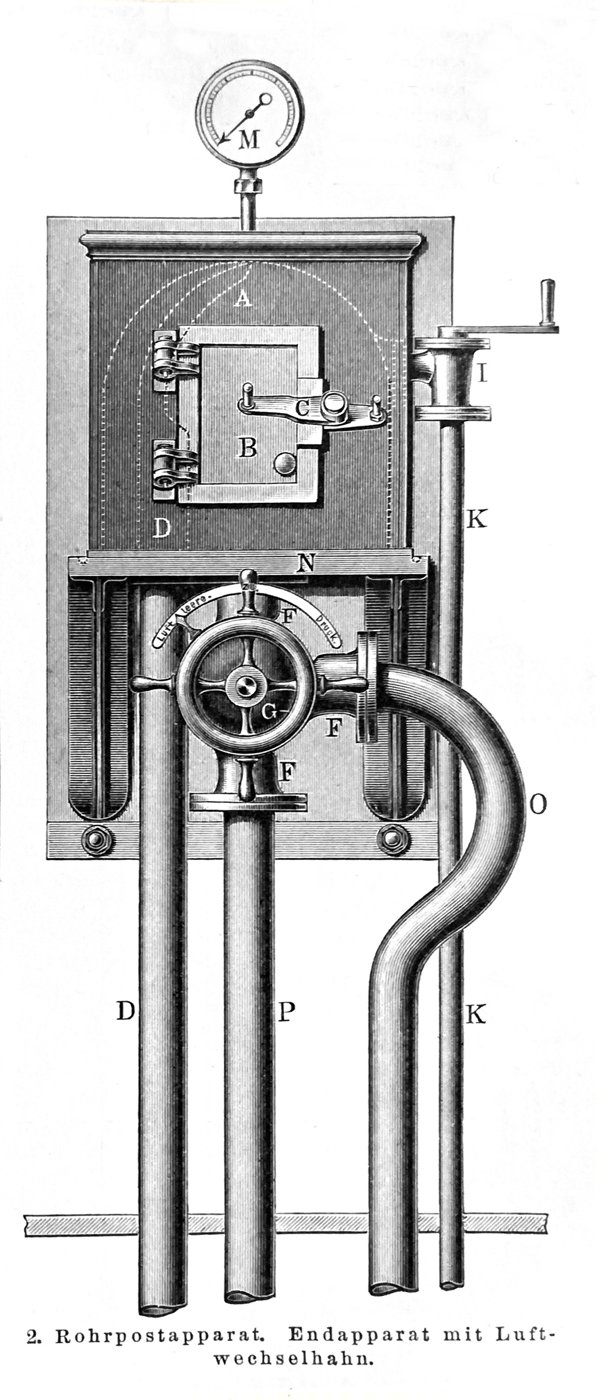
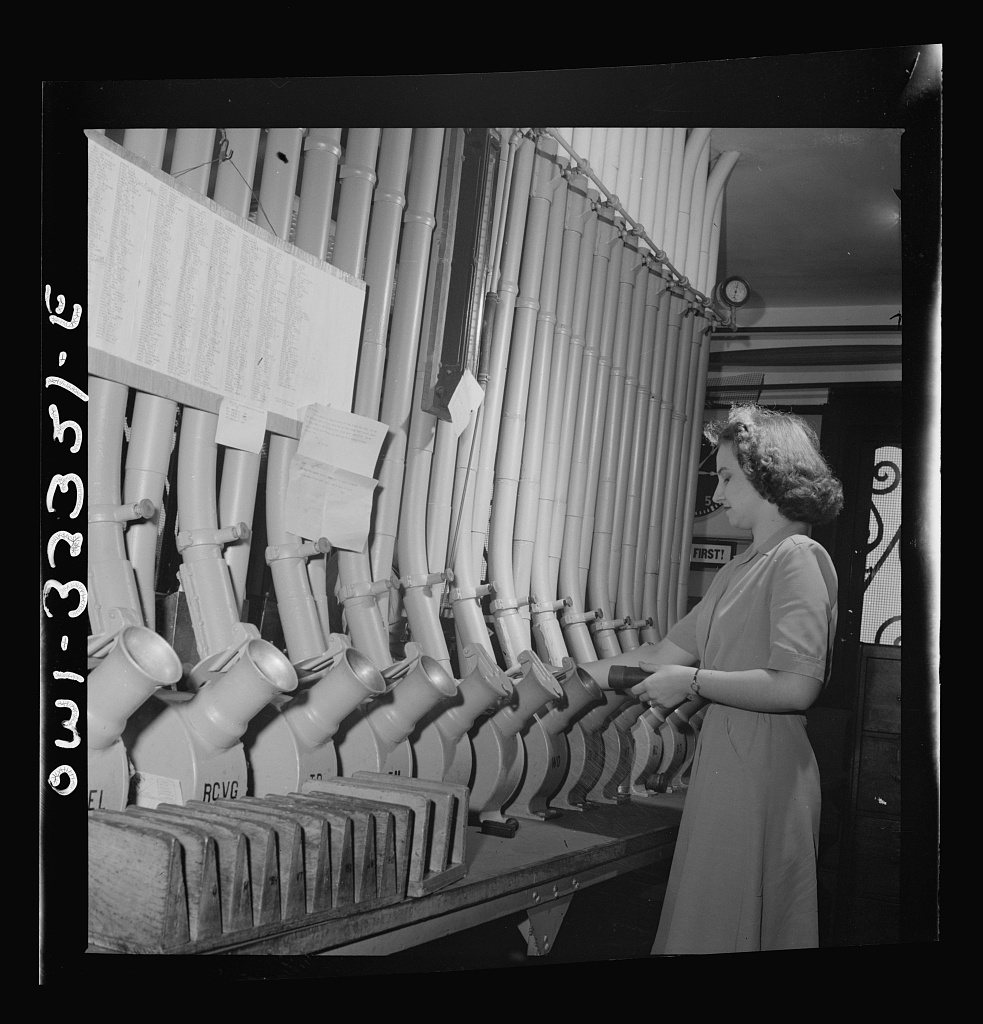
Air does not “suck the mail.” A blower or steam pump raises pressure behind a carrier, lowers it ahead, or both. The carrier’s packing rings — leather, felt, later synthetics — seal against the bore so the slug of air has something to push. Reverse the gradient and the same tube runs the other way. The National Postal Museum puts the U.S. case in one sentence: cartridges were loaded into airtight tubes; compressed air propelled them; they could also travel in reverse by suction that created a partial vacuum.
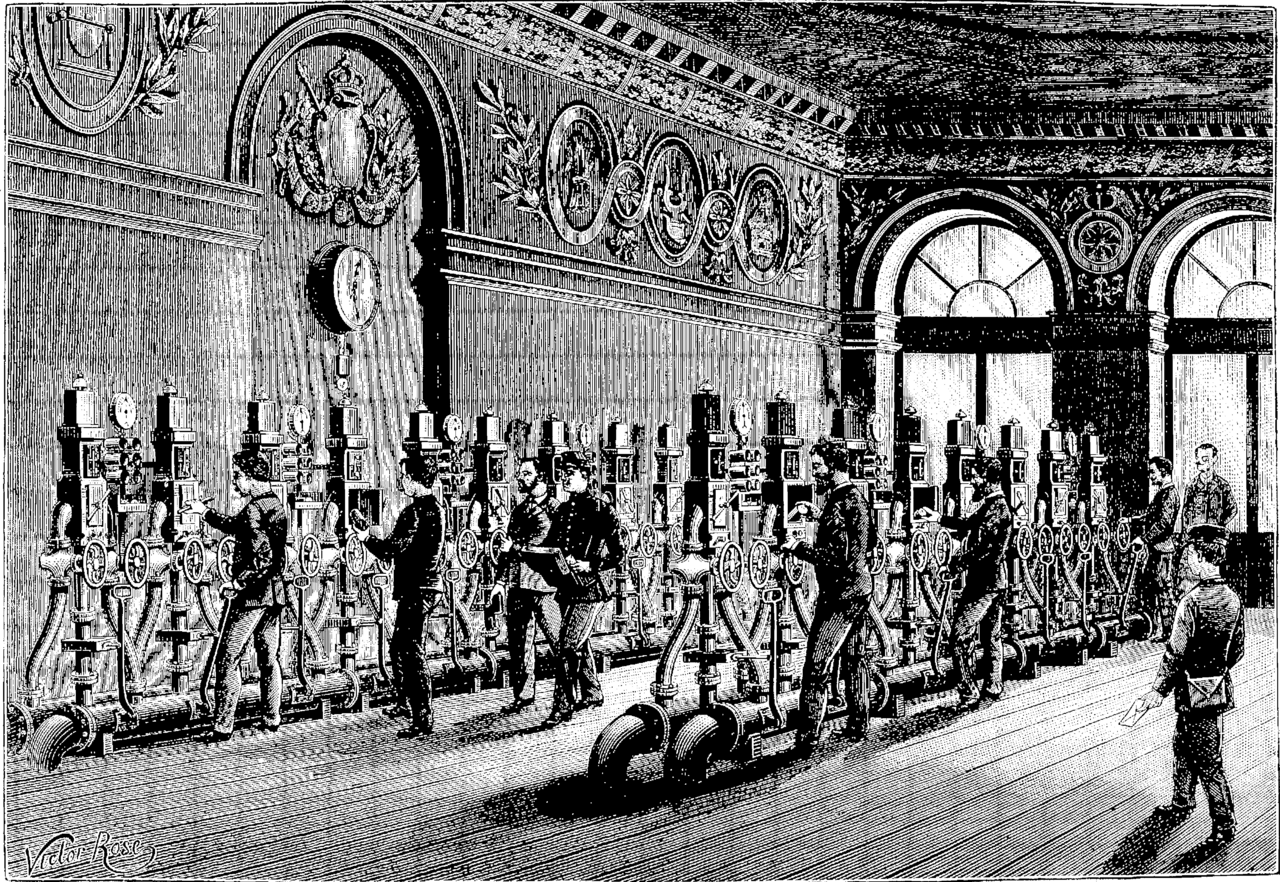
European letter networks and American bulk-mail tubes used the same physics at different scales. Austria Post describes Vienna’s pipes as 65 millimetres internal diameter, laid about one metre underground. The Smithsonian’s New York canister — the object on view at the National Postal Museum — measures 24½ × 8¼ inches. Those are not interchangeable machines.
There is no universal “tube speed.” New York figures come from Smithsonian / National Postal Museum captions. Vienna’s “around 50 km/h” is Austria Post’s wording on the 2025 stamp issue.