Adjacent industry · not a surviving city post

The remnant is a different machine.

Hospitals, warehouses, casinos, and a shrinking number of bank drive-throughs still shoot carriers through pipes. That is a living manufacturing sector with vendors, RFID, and laboratory-validation papers. It is not the Paris pneumatique in a lab coat, and it is not New York 1897 with better plastic.

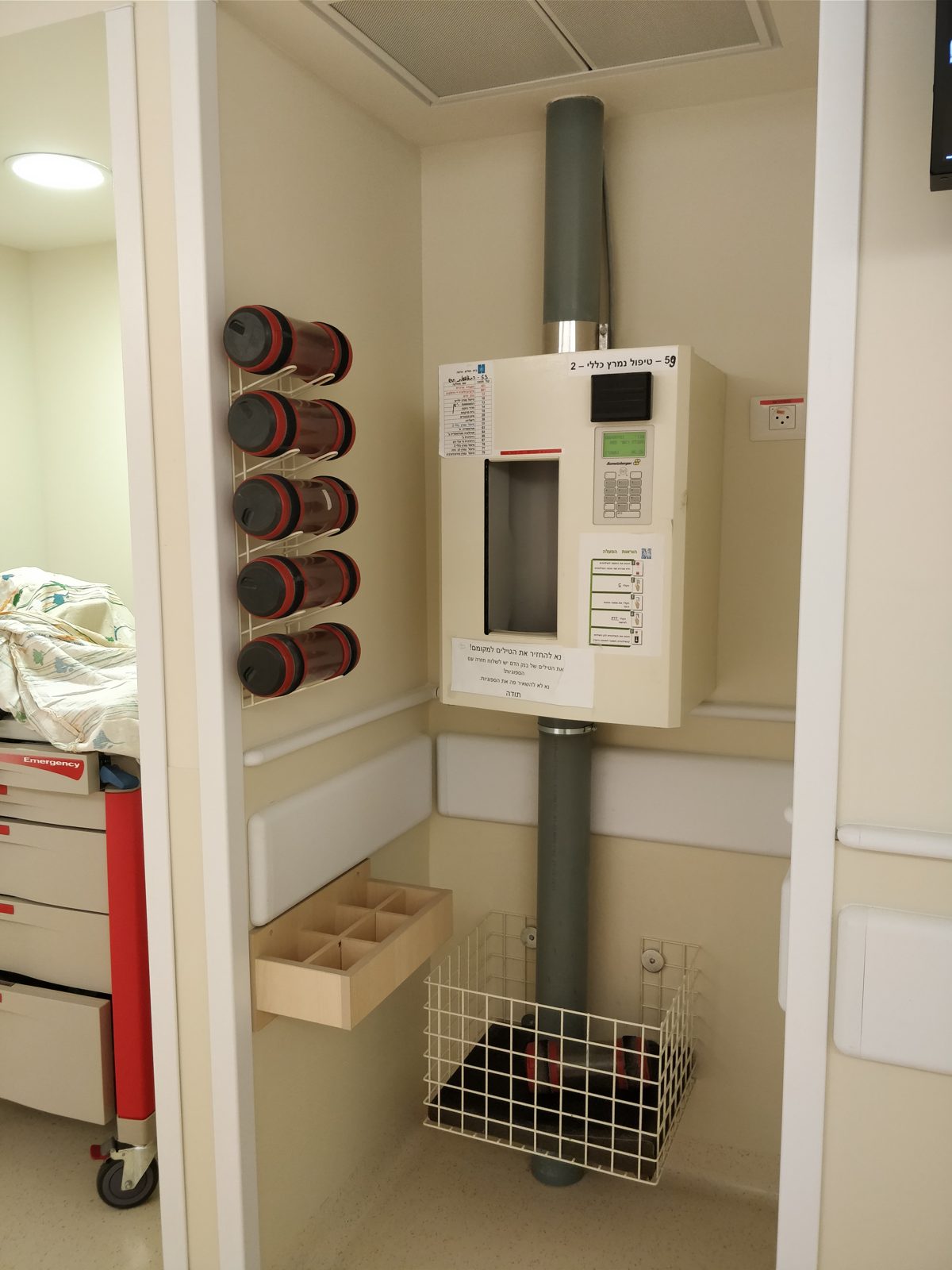
Hospital pneumatic tube send/receive station with a basket and plastic canisters on a rack
Hospital send/receive station and plastic carriers, 2017. Photograph by Hexafluoride, CC BY-SA 4.0. This is clinical logistics, not municipal mail.

The National Postal Museum, even while writing about historic city mail, already separated the surviving uses: large stores, hospitals, and banks. Wikipedia’s pneumatic-tube article treats hospital PTS as its own subsection — specimen transport, pharmacy unit-dose, automated handover to pre-analytical lines — with a warning that laboratories validate systems locally because haemolysis and analyte effects vary.

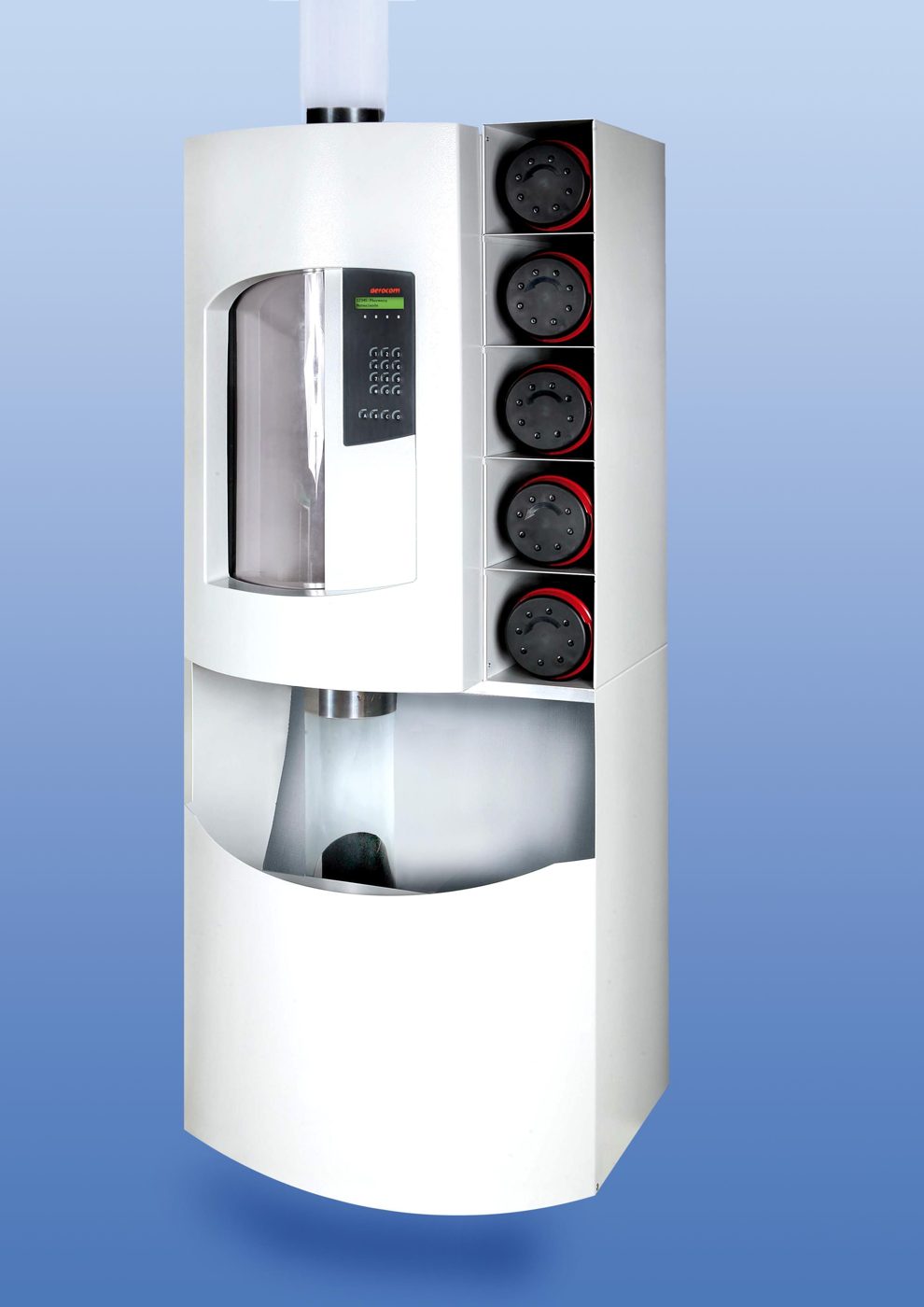
Vendors (Swisslog/Translogic, Pevco, Sumetzberger, Aerocom, and others) sell computer-controlled networks with priority rules, station access control, and tracking. Wikipedia summarises modern small-bore systems as reaching speeds of around 7.5 metres per second, citing a 2010 Stanford Medicine news piece on hospital sample transport. That figure is a modern-industry summary, not a postal-history speed for 1897 New York.

A 1953 Lamson mail can and a 2017 hospital pod share a pressure gradient. They do not share a tariff, a postmaster, or a street franchise.

Where the pipes still go

Hospitals first. Then money, parts, waste.

Documented living uses, distinct from city postal dates.

Clinical

Specimens and drugs

Ward and emergency department to central lab; pharmacy to ward. Weight, duration, and acceleration limits matter because blood is not a letter. Six-inch bores are discussed in the literature for heavy IV bags versus four-inch lines.
Retail & cash

Tills, stores, drive-throughs

Department-store tube rooms and supermarket cash carriers are a twentieth-century cousin. Bank drive-through tubes still exist; many have been pulled as mobile apps and ATMs took the transaction. Bank drive-through pods still appear in Wikimedia photographs of twentieth-century cash carriers.

Other buildings

Factories, casinos, HQ

The CIA’s Original Headquarters Building used a Lamson system — more than 30 miles of 4-inch steel tubing, about 150 stations, 1962–1989 — described on the Agency’s own artifact page. NASA Mission Control had console tubes. Steel plants have sent hot samples. None of that is a municipal post.

Modern pneumatic tube station with a carrier in the launch position and others stored beside it
Modern Rohrpost station. Photograph by Isztwan, CC BY-SA 3.0. Building-scale apparatus.
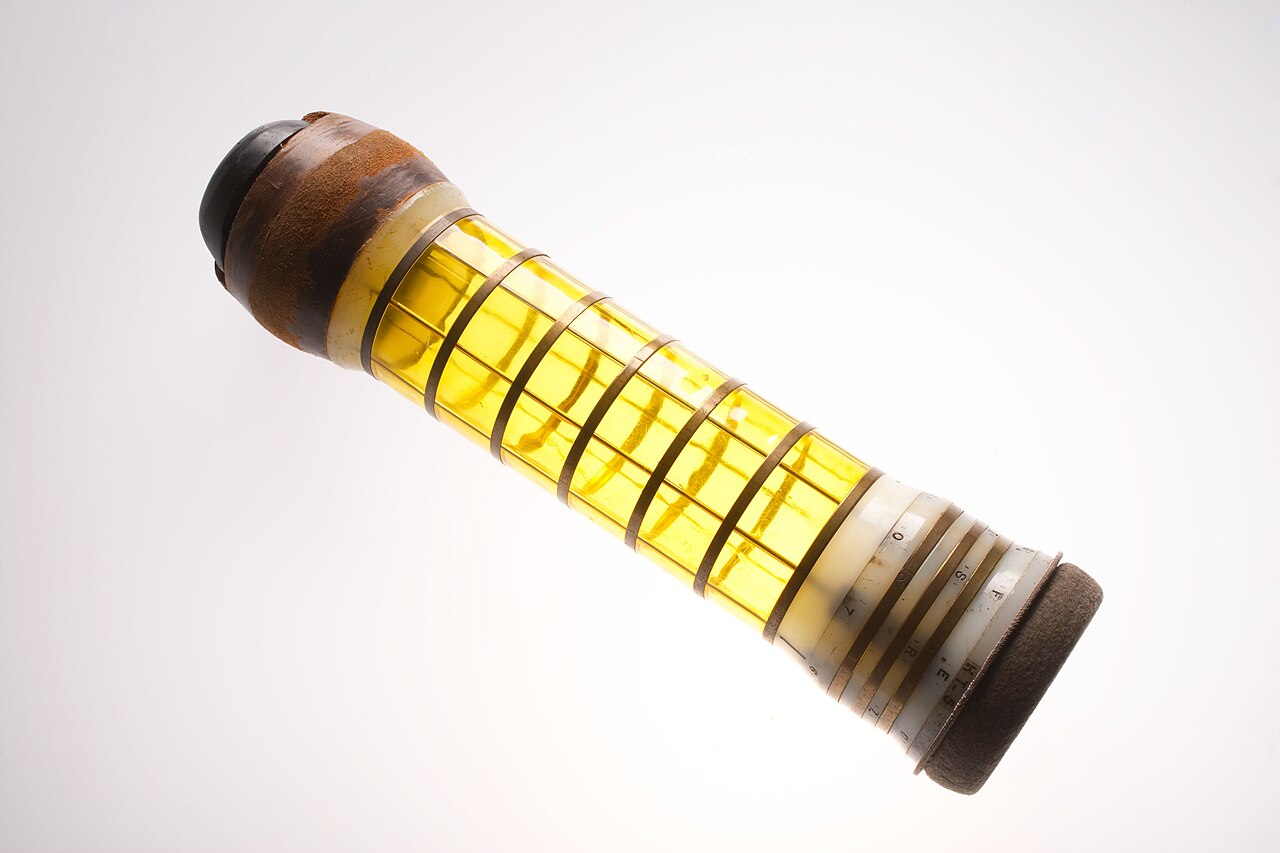
Lamson pneumatic-tube carrier from CIA Original Headquarters Building
Lamson carrier from CIA Original Headquarters Building (system 1962–1989; more than 30 miles of 4-inch tubing, about 150 stations — CIA artifact text). U.S. federal work, public domain. Building mail, not city post.